Waterproofing Basics: Exterior vs. Interior
The Waterproofing Basement Walls Standard is designed to move homeowners beyond reactive “patch-work” repairs and toward a proactive, engineered methodology for managing hydrostatic pressure and protecting permanent structural integrity.
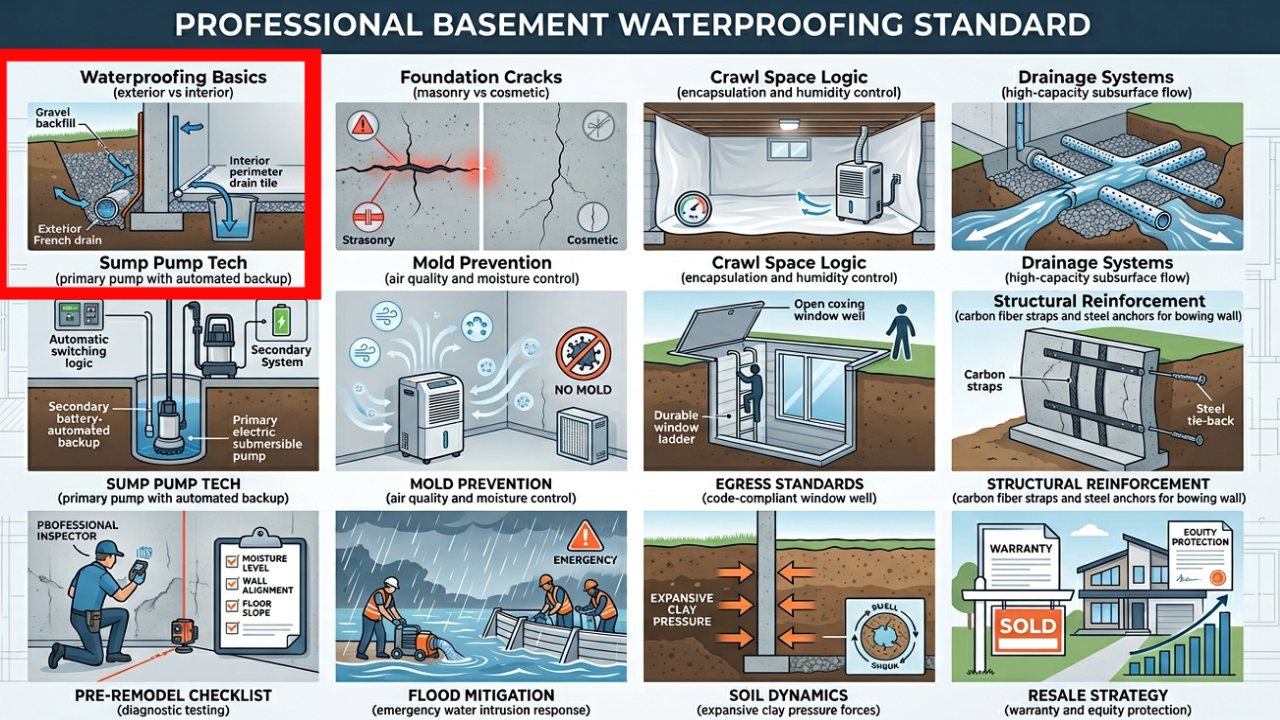
Exterior: Stop Water at the Source
Exterior systems focus on keeping the foundation wall from becoming saturated in the first place using precision barriers—high-performance polymer membranes that require expert application.
- +Precision Barriers: High-performance polymer membranes requiring expert application.
- +Wall Protection Mindset: Keeps the foundation itself drier by design.
- +Source Control: Treats the cause (intrusion physics), not just interior symptoms.
Interior: Engineer Pressure Relief
Interior systems function as a controlled “relief” approach when exterior access is constrained, designed as hydrostatic pressure engineering that diverts large volumes of water away from the footer.
- +Hydrostatic Pressure Engineering: Systems designed to divert thousands of gallons away from the footer.
- +Managed Pathways: Moves water to controlled collection and discharge points.
- +Framework Fit: Part of an engineered, whole-system methodology—not a standalone “paint fix.”
Why the Legacy “Patch” Model Fails
The legacy model relies on reactive, temporary solutions that fail to address the structural physics of water intrusion. A common example is surface-level paints—retail sealants that eventually bubble and fail under pressure.
“A lifetime-dry environment isn’t created by surface sealing. It’s created by engineered systems that manage hydrostatic pressure.”
What the Professional Standard Changes
Instead of treating moisture as an interior cosmetic problem, the professional standard treats it as a systems problem: redirecting water away from the foundation and using expert-applied barriers where appropriate.