Foundation Cracks: Structural vs. Cosmetic
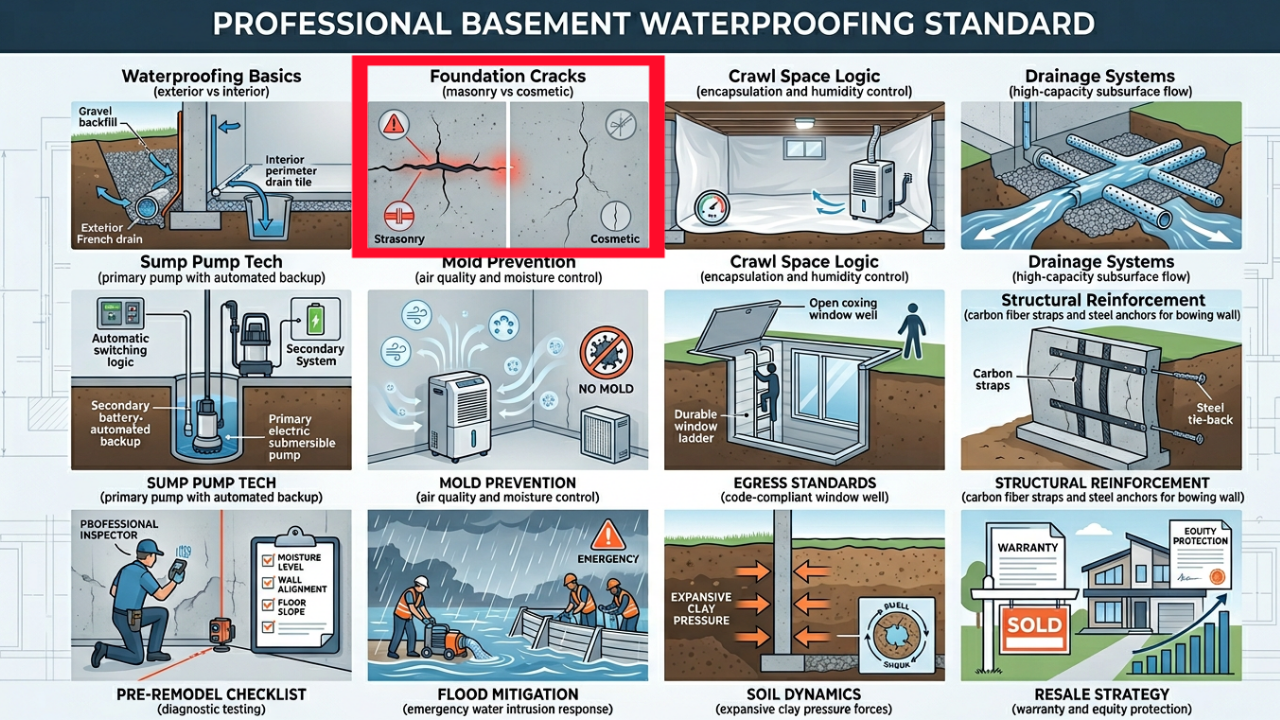
Not all cracks are created equal. While some are natural results of curing concrete, others signal an active structural failure caused by shifting soil and lateral pressure.
The Legacy “Patch” Approach
Retail solutions provide a temporary surface seal but fail to address the movement of the wall or the source of water.
- ✗Hydraulic Cement: Rigid patches that snap when the wall shifts.
- ✗Topical Caulks: Dry out and peel under water pressure.
- ✗Grinding Cracks: Often weakens the joint further.
The Professional Standard
Engineering the wall back to its original monolithic strength through deep-void stabilization.
- ✓Epoxy Masonry Welding: Penetrates the entire wall thickness.
- ✓Polyurethane Expansion: Fills exterior voids and prevents future leaks.
- ✓Carbon Fiber Strapping: Stops lateral bowing permanently.
Diagnosing Structural Threats
Every foundation crack tells a story of the pressure surrounding your home. A professional diagnostic assessment identifies the root cause—be it settlement, hydrostatic pressure, or frost heave.
Horizontal vs. Vertical Cracking
Vertical cracks are often natural settling. However, horizontal cracks are a major red flag indicating soil pressure is bowing the wall inward. These require immediate stabilization to prevent catastrophic failure.
Restoring the Monolithic Pour
Professional injection doesn't just stop water; it restores the wall's original strength using industrial-grade polyurethanes. This "welds" the concrete back together, ensuring the foundation acts as a single, solid unit once again.