The Diagnostic Standard: Testing Before the Build
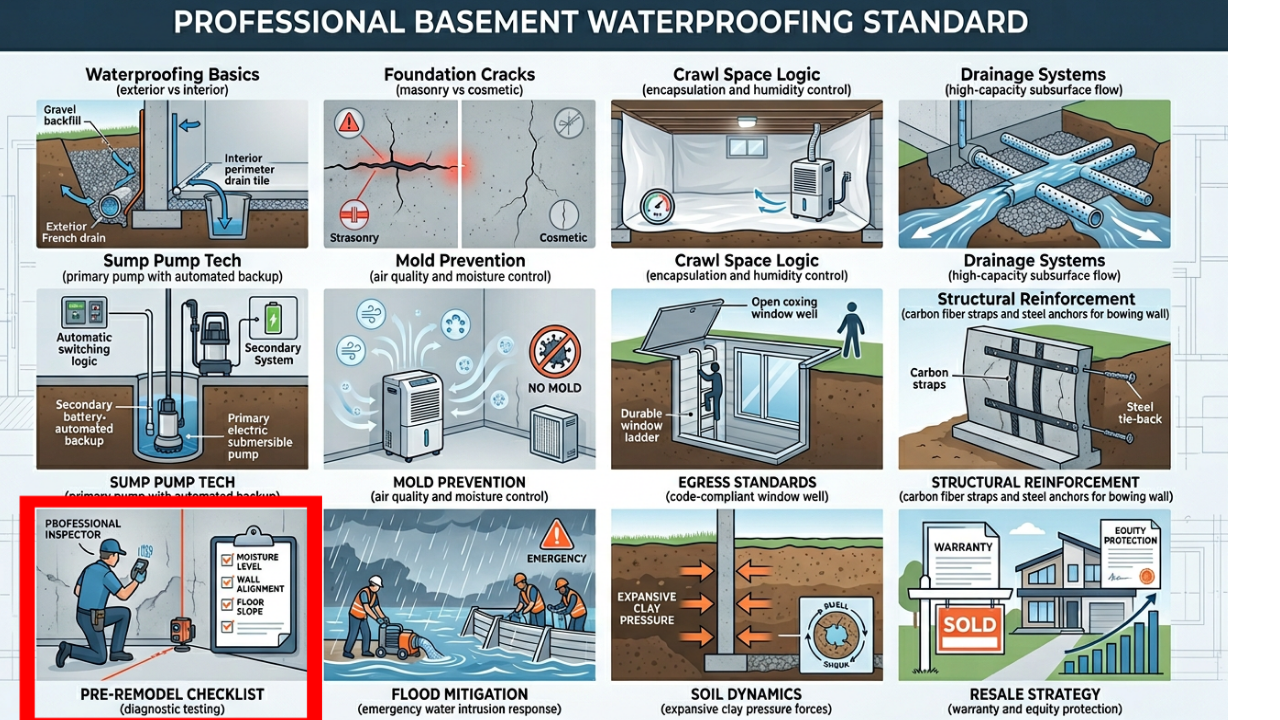
Finishing a basement without a moisture audit is a high-risk gamble. The professional standard mandates diagnostic testing to verify the building envelope before drywall and insulation hide the foundation.
The Legacy "Cover-Up"
Traditional remodeling often focuses on aesthetics while ignoring the masonry envelope, leading to mold cycles trapped behind new walls.
- ✗Ignoring the Envelope: Building against unsealed masonry.
- ✗Reactive Repairs: Discovering leaks only after the drywall is ruined.
- ✗Passive Risks: Ignoring radon or humidity loads until they become health issues.
The Professional Standard
A pre-construction audit identifies vulnerabilities in the foundation, allowing for permanent fixes while the structural components are still accessible.
- ✓Vapor Decoupling: Installing industrial-grade barriers to separate masonry from living space.
- ✓Capacity Upgrades: Upsizing sump systems and adding redundancy for finished spaces.
- ✓Moisture Verification: Using diagnostic tools to confirm zero-seepage across all walls.
Protecting Your Investment
Once the drywall is up, you lose the ability to monitor the foundation for cracks or seepage. The 12-Pillar standard requires a "thermal and vapor break" to prevent "mystery" mold.
The Importance of the Thermal Break
Professional preparation requires a physical separation between cold concrete and warm living air. This prevents condensation—the primary cause of musty basement odors—from forming inside wall cavities.
Upgrading for Peace of Mind
Because finished basements contain expensive flooring and electronics, the standard recommends upgrading to high-capacity dual-pump systems with smart alarms before construction starts.