Sump Pump Tech: Primary Systems + Automated Backup
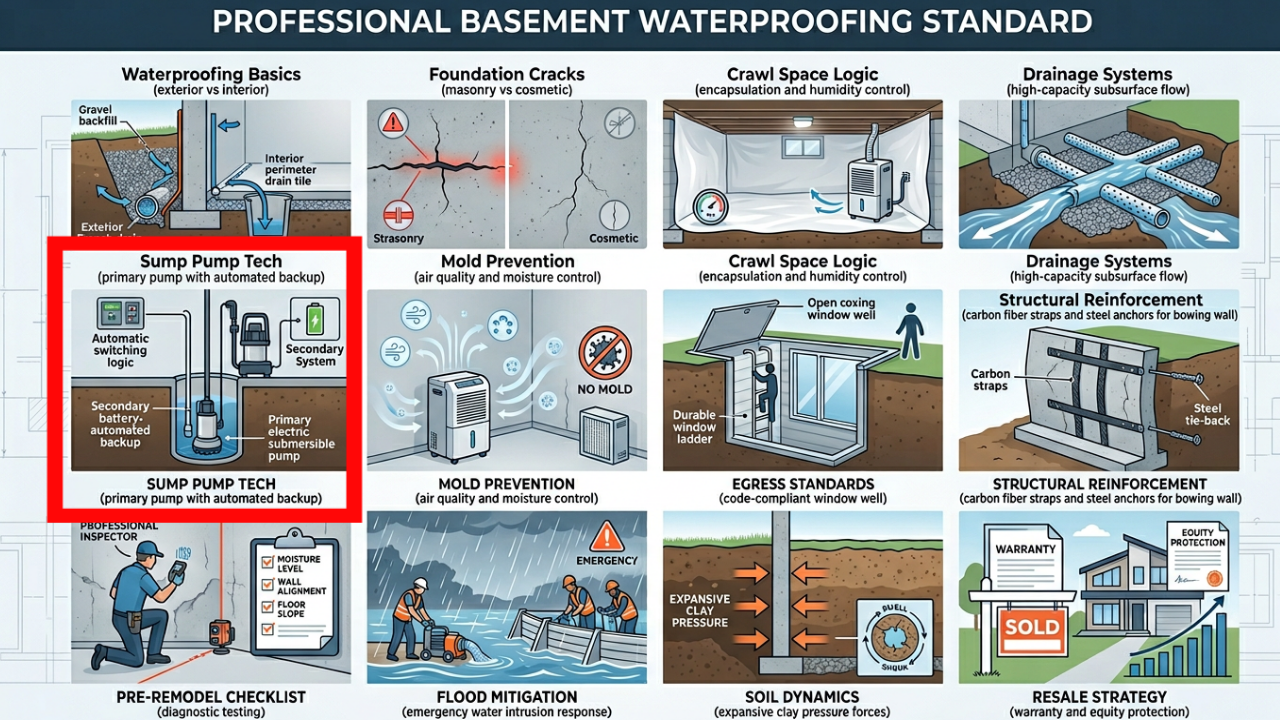
The sump pump is the heart of any interior drainage network. The professional standard demands mechanical redundancy—pairing high-capacity primary units with secondary battery-powered systems to prevent flooding during power grid failures.
The Legacy “Single Pump” Model
Many retail-grade installations rely on a single, plastic-housed pump. This creates a critical single point of failure that leaves the basement vulnerable during severe weather.
- ✗Plastic Components: Lower thermal tolerance leads to motor burnout during high-volume events.
- ✗Single Switch: Mechanical float failure in one pump stops the entire system.
- ✗No Grid Fail-Safe: If the power goes out during a storm, the drainage system stops working.
The Professional Standard
An engineered system assumes the primary pump will eventually face a mechanical or power failure. Redundancy is built into every component to ensure continuous operation.
- ✓Cast-Iron Construction: Industrial materials dissipate heat and extend mechanical life.
- ✓Secondary DC Backup: A dedicated battery system that takes over immediately if the AC power fails.
- ✓Automated Switching Logic: Dual floats ensure the backup pump activates if the primary fails to keep up.
Mechanical Reliability & Redundancy
A professional sump pump installation is more than just a motor in a pit. It is an engineered sub-system designed to manage peak hydrostatic loads while maintaining a "fail-safe" status through automated battery backups.
Why Battery Redundancy is Non‑Negotiable
Storms that cause basement flooding are the same events most likely to cause power outages. Without a DC-powered secondary system, even the most expensive primary pump becomes useless the moment the grid goes dark.
Smart Monitoring and Alarms
The standard incorporates high-water alarms and smart logic controllers. These systems alert the homeowner to pump activity or battery status, providing early warning before water ever reaches the floor slab level.