Crawl Space Logic: Encapsulation & Humidity Control
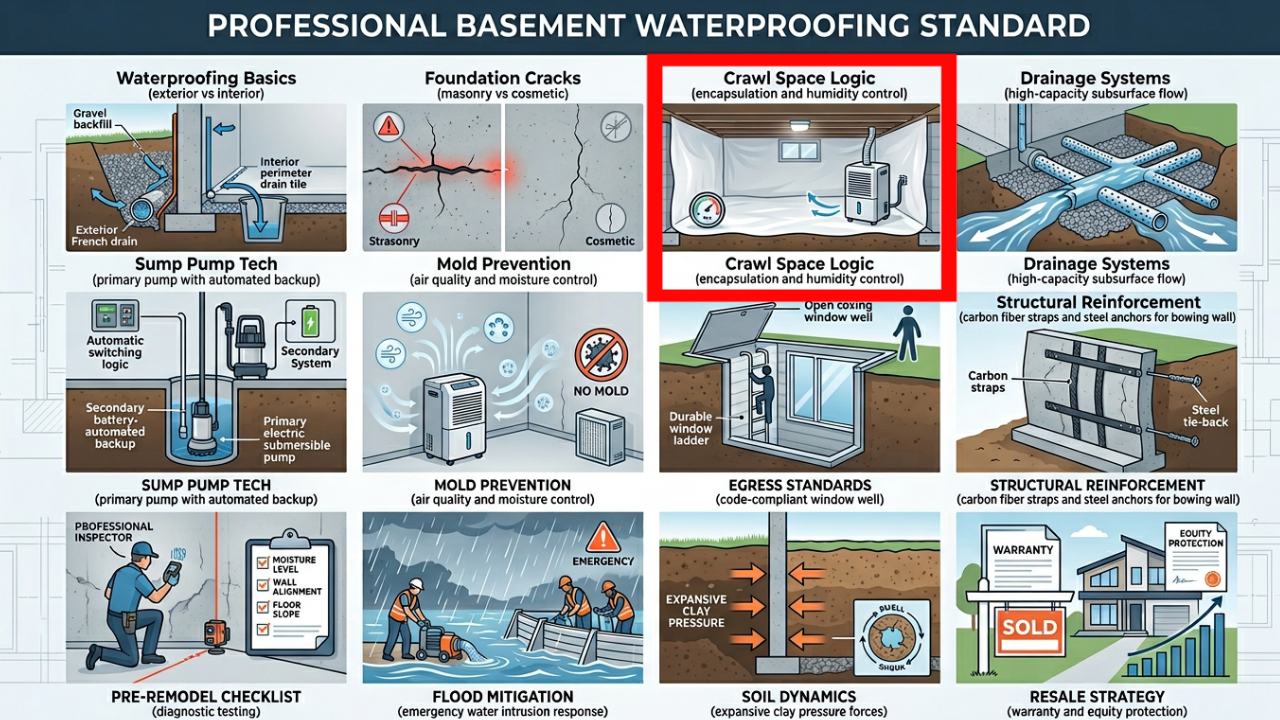
Crawl space performance is driven by one variable: moisture load. The professional standard treats the crawl space as a controlled environment—built around encapsulation and professional humidity control to protect air quality.
The Legacy “Vented” Model
Traditional venting assumes outside air will “dry out” the crawl space. In practice, it often introduces humidity and feeds condensation and wood moisture cycling.
- ✗Foundation vents: Outside air can condense on cooler surfaces below grade.
- ✗Exposed earth: Ongoing soil evaporation drives moisture into the home.
- ✗Uncontrolled conditions: Seasonal swings create a recurring rot/mold risk.
The Professional Standard
Encapsulation focuses on isolating the crawl space from ground moisture and then controlling humidity mechanically to stabilize the environment and protect indoor air quality.
- ✓Encapsulation: A sealed vapor barrier system that blocks ground moisture.
- ✓Professional humidity control: Dedicated equipment designed for below-grade moisture loads.
- ✓Air quality protection: Reduces conditions that allow mold to take hold.
The Science of Encapsulation
The goal is simple: remove the conditions that allow moisture to accumulate. Encapsulation blocks ground vapor, and humidity control keeps the crawl space stable over time—supporting healthier air throughout the home.
Why Humidity Control Is Non‑Negotiable
Encapsulation alone reduces moisture entry, but professional humidity control is what stabilizes the environment and prevents a crawl space from becoming a persistent source of damp air.
What “Professional” Means in Practice
The standard relies on dedicated systems engineered for below-grade environments—built to manage the specific moisture load of a foundation footprint rather than relying on retail dehumidifiers.